
Pigmentation Serums Explained: How to Fade Dark Spots and Even Your Skin Tone

The right pigmentation serum depends on the type of pigmentation you have. Sun spots, marks left behind by breakouts and hormonal melasma all form in slightly different ways, so the most effective approach pairs a targeted serum with daily sunscreen and, for some skin, an in-clinic treatment.
If you've spent years trying to fade the same dark spots, you're not alone, and it's rarely because you haven't tried hard enough. Below, I'll explain how I match pigmentation serums to my clients' skin in clinic, so you can build a routine that works with your skin rather than against it.
Key takeaways
Identify your type of pigmentation first, as sun spots, breakout marks and melasma respond to different approaches.
SkinCeuticals Discoloration Defense combines tranexamic acid, kojic acid and niacinamide, and is designed for most skin types.
Daily broad-spectrum sunscreen is essential, as UV exposure is one of the biggest drivers of pigmentation.
Pigmentation serums work gradually, so give any new serum around 12 weeks of consistent use.
If you suspect melasma, book a skin consultation before starting new active ingredients.
What is pigmentation, and why does it happen?
Pigmentation is the term for patches of skin that look darker than the skin around them. It happens when your skin produces extra melanin, the pigment that gives skin its colour, usually in response to a trigger such as UV exposure, inflammation or hormonal changes.
In Australia, sun exposure is the most common trigger. Even incidental sun, like the drive to work or a coffee outdoors, adds up over time and can show up years later as uneven tone and dark spots.
“Pigmentation is one of the most common concerns I see in clinic, and it’s also one of the most misunderstood. Most people have been trying to fade it for years with products that were never designed for their type of pigmentation.”
The three most common types of pigmentation
| Type | What it looks like | Common triggers | Where to start |
|---|---|---|---|
| Sun spots | Defined brown spots on the face, chest and hands | Cumulative UV exposure | A targeted serum plus daily SPF 50+ |
| Post-inflammatory hyperpigmentation | Flat marks left after breakouts, irritation or injury | Inflammation in the skin | A gentle brightening serum, without picking or over-exfoliating |
| Melasma | Larger, symmetrical patches, often on the cheeks, forehead and upper lip | Hormones, heat and sunlight | A skin consultation first, as melasma needs a careful, personalised plan |
Many people have more than one type at once, which is one reason a single product rarely solves everything.
The key ingredients in a pigmentation serum
Pigmentation serums work by targeting different steps in the way pigment is made and shows up on the surface of your skin. These are the ingredients worth knowing.
| Ingredient | What it's known for | Found in |
|---|---|---|
| Tranexamic acid | Helps target the pathways linked to discolouration | SkinCeuticals Discoloration Defense, SkinBetter Science Even Tone |
| Kojic acid | A brightening ingredient that helps with the look of dark spots | SkinCeuticals Discoloration Defense |
| Niacinamide | Supports a more even-looking tone and a healthy skin barrier | SkinCeuticals Discoloration Defense, SkinBetter Science Even Tone |
| Alpha-arbutin | Helps with the look of uneven tone and dark spots | iS Clinical Brightening Serum, SkinBetter Science Even Tone |
| Vitamin C | An antioxidant that supports a brighter-looking complexion | iS Clinical Brightening Complex, SkinBetter Science Even Tone |
| AHAs (glycolic and lactic acid) | Gently exfoliate to refresh the skin's surface | iS Clinical Brightening Serum, SkinBetter Science Even Tone |
How to choose a pigmentation serum for your skin
When a client comes to me about pigmentation, I work through four questions before recommending anything:
What type of pigmentation is it? Sun spots, breakout marks and melasma each need a different approach.
How sensitive is your skin? Reactive skin needs a formula that's tolerated well and introduced slowly.
What else is in your routine? Exfoliating acids and retinol need to be balanced so you don't over-treat your skin.
Are you wearing sunscreen every day? Without it, even the best serum will struggle.
“Before I recommend anything, I want to know what type of pigmentation we’re dealing with. Sun spots, breakout marks and melasma all behave differently, so they need a different plan.”
The pigmentation serums I recommend
SkinCeuticals Discoloration Defense. Best suited to most skin types, including oily and combination skin, and visible dark spots, breakout marks and uneven tone.
Discoloration Defense combines 3% tranexamic acid, 1% kojic acid and 5% niacinamide with HEPES, a gentle exfoliant, according to SkinCeuticals Australia. It's lightweight, oil-free and hydroquinone-free, and it's designed to be used morning and night. In the morning, apply it after your vitamin C serum and before sunscreen.
SkinBetter Science Even Tone Intensive Serum. Best suited to persistent discolouration, dark spots and post-breakout marks, including sensitive skin.
Even Tone Intensive Serum brings together tranexamic acid, niacinamide, alpha-arbutin, vitamin C and a blend of AHAs, alongside SkinBetter's antioxidant technology. The brand says it was tested on sensitive skin and is fragrance-free. As it contains AHAs, daily sun protection is especially important. SkinBetter Science products at JBH are available after a quick online consultation, so I can make sure it's right for your skin.
iS Clinical Brightening Serum. Best suited to uneven tone, dark spots and dull or uneven texture.
Brightening Serum pairs alpha-arbutin with sugarcane-derived glycolic acid, lactic acid and salicylic acid, so it gently exfoliates while targeting the look of pigmentation. It's a lovely option if your skin also feels congested or rough.
iS Clinical Brightening Complex. Best suited to uneven tone and pigmentation, for those who prefer a moisturising cream texture.
Brightening Complex combines stabilised vitamin C with mushroom extract and Norwegian kelp in a hydroquinone-free formula. It can be applied across the face and neck or targeted to areas of uneven tone.
Which pigmentation serum suits your skin? At a glance
| Serum | Brand | Best suited to | Key ingredients | Texture |
|---|---|---|---|---|
| Discoloration Defense | SkinCeuticals | Most skin types, dark spots, breakout marks | Tranexamic acid, kojic acid, niacinamide | Lightweight serum |
| Even Tone Intensive Serum | SkinBetter Science | Persistent discolouration, sensitive skin | Tranexamic acid, niacinamide, alpha-arbutin, vitamin C, AHAs | Serum (consultation required) |
| Brightening Serum | iS Clinical | Uneven tone with dull or rough texture | Alpha-arbutin, glycolic, lactic and salicylic acids | Lightweight serum |
| Brightening Complex | iS Clinical | Uneven tone, prefers a cream | Stabilised vitamin C, mushroom extract, kelp | Cream |
How to use a pigmentation serum in your routine
Consistency matters more than layering lots of products. Here's the routine I recommend for most clients.
Morning
Cleanse and pat your skin dry.
Apply a vitamin C serum, if you use one. [LINK TO: Vitamin C Serums Explained, /blog/vitamin-c-serum]
Apply your pigmentation serum.
Moisturise.
Finish with a broad-spectrum SPF 50+, such as SkinCeuticals Ultra Facial Defense SPF50 or iS Clinical Eclipse SPF 50+, and reapply through the day when you're outdoors.
Evening
Cleanse.
Apply your pigmentation serum.
If you use retinol, apply it on the nights recommended for your skin, then moisturise.
“No pigmentation serum can outwork a missing sunscreen. If you’re not wearing SPF every single day, the sun will undo your progress faster than any serum can build it.”
How long does it take for pigmentation to fade?
Pigmentation fades gradually, because your skin needs time to renew and shed the cells holding the extra pigment. Give any new pigmentation serum around 12 weeks of consistent morning and night use before judging how it's working, and keep up your sunscreen the whole time.
Pigmentation can also return if your skin is exposed to the same triggers again, which is why ongoing sun protection and a maintenance routine matter as much as the serum itself.
When to consider an in-clinic treatment
A good serum is the foundation of any pigmentation plan, but some pigmentation sits deeper in the skin or has built up over many years. For these clients, I may recommend combining their home routine with a treatment in clinic. Every treatment plan starts with a consultation, because the right option depends on your skin type, your type of pigmentation and your history.
“Serums are the foundation, but some pigmentation sits deeper or has been there for years. That’s when I’ll talk to a client about combining their home routine with a treatment in clinic.”
Common pigmentation mistakes to avoid
Skipping sunscreen on cloudy days. UV still reaches your skin when it's overcast.
Over-exfoliating. Too many acids or scrubs can irritate your skin and trigger more pigmentation.
Picking at breakouts. This increases inflammation and the chance of a mark being left behind.
Switching products too quickly. Pigmentation needs consistent use over weeks, not days.
Treating melasma like sun spots. Melasma needs a gentler, personalised approach, so it's worth getting professional advice first.
Not sure what type of pigmentation you have?
If you're unsure what's causing your pigmentation, or you suspect melasma, I'd love to help. In a skin consultation, I'll assess your skin in person and recommend the serum, routine and any treatments that are right for you. No pressure, just honest, expert guidance for your skin journey.
Frequently asked questions
Can pigmentation be removed permanently? Pigmentation can often be faded significantly, but it can return if your skin is exposed to the same triggers, especially UV. Daily sunscreen and a consistent maintenance routine are the best way to keep it under control.
What is the best serum for pigmentation? The best pigmentation serum depends on your type of pigmentation and your skin. SkinCeuticals Discoloration Defense suits most skin types, while SkinBetter Science Even Tone Intensive Serum and iS Clinical Brightening Serum offer alternatives for different needs. A skin consultation is the best way to find the right match.
Can I use Discoloration Defense with vitamin C? Yes. SkinCeuticals recommends applying Discoloration Defense after your vitamin C serum in the morning, then finishing with a broad-spectrum sunscreen.
How long does it take for pigmentation to fade? Pigmentation fades gradually. Give any new serum around 12 weeks of consistent morning and night use, alongside daily sunscreen, before judging the results.
What causes pigmentation on the face? The most common causes are sun exposure, inflammation from breakouts or irritation, and hormonal changes. In Australia, cumulative sun exposure is one of the biggest drivers.
How do I know if I have pigmentation or melasma? Melasma usually appears as larger, symmetrical patches on the cheeks, forehead or upper lip, and is linked to hormones, heat and sunlight. Sun spots tend to be smaller and more defined. A skin consultation is the best way to know for sure.
Does sunscreen help with pigmentation? Yes. Daily broad-spectrum SPF 50+ helps protect your skin from the UV exposure that triggers and darkens pigmentation, and it helps protect the progress you make with your serum.
Start fading the look of dark spots today
Discover SkinCeuticals Discoloration Defense at JBH Aesthetics, with 15% off your first order, free shipping on all orders across Australia over $65 and complimentary samples in every order.
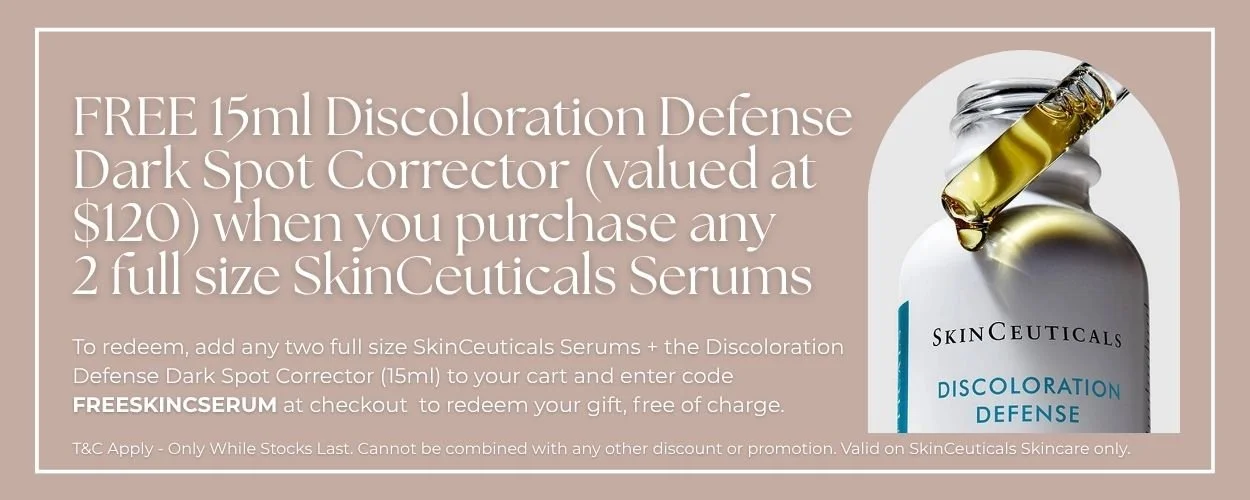
Buy any two full size SkinCeuticals serums and receive a complimentary 15ml Discoloration Defense Dark Spot Corrector, valued at $120, with code FREESKINCSERUM. Only while stocks last. T&Cs apply. (Delete offer when the gift with purchase ends)
By Jessica Bugeja Huon, Cosmetic and Dermatology Registered Nurse and founder of JBH Aesthetics, Camden NSW.
Last updated 19th October 2026.